
Guides
Washer Dryer Combo vs Separate Machines: Space and Laundry Loads
A washer dryer combo uses one appliance for washing and drying. Separate machines divide those jobs between two appliances. The better arrangement depends on how much laundry you do, when you need it dry and how your laundry area is set up.
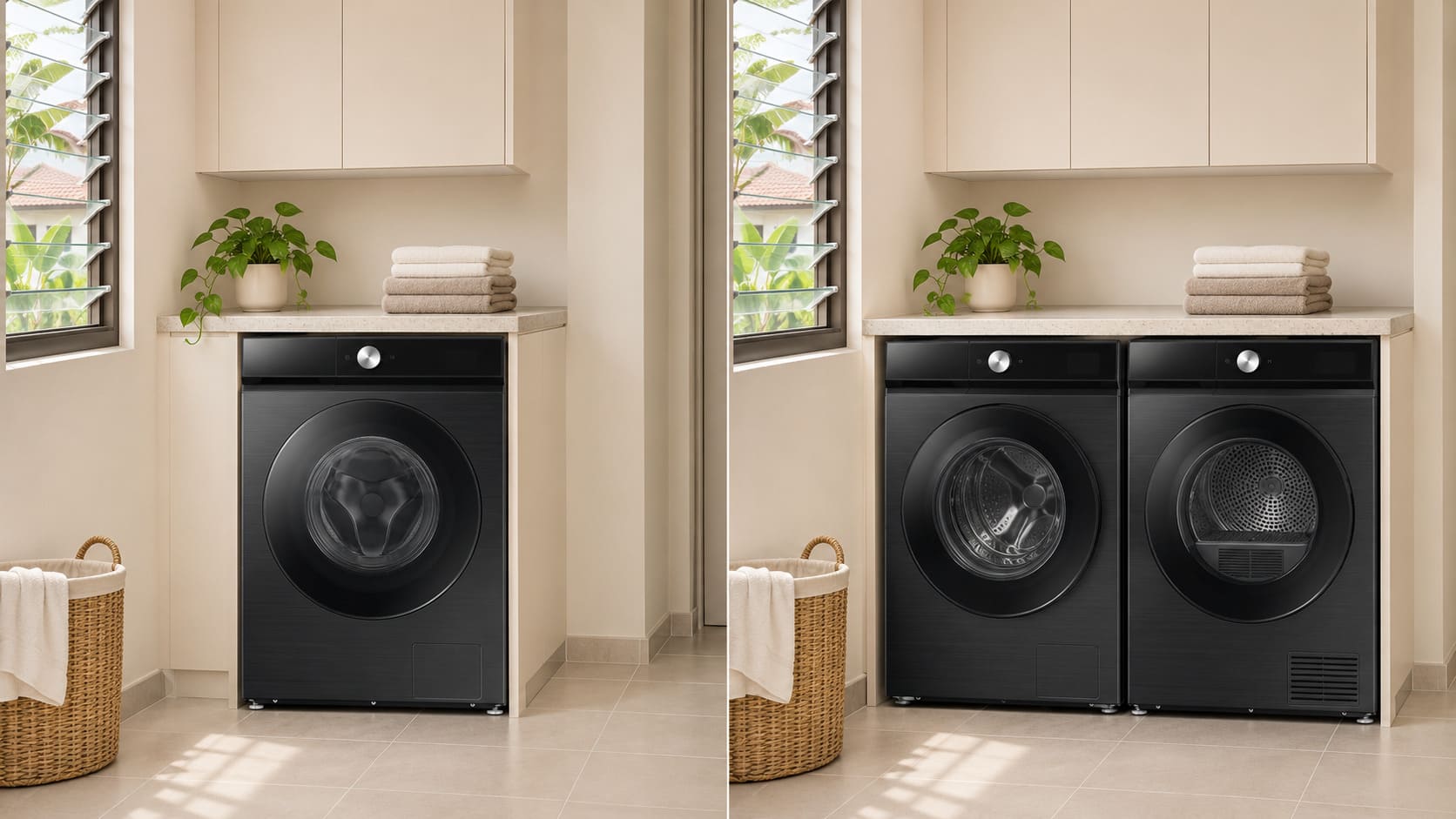
Compare your laundry day
| Your routine | Combo | Separate machines |
|---|---|---|
| One load at a time | Can keep suitable laundry in one drum between stages | Requires transfer from washer to dryer |
| Several loads in succession | The drum stays occupied through washing and drying | A washer can run while a previous load dries |
| Limited floor area | One appliance footprint, plus required clearance | Side-by-side needs more width; stacking requires approved compatibility |
A busy weekend with several family loads is different from washing a small load every other day. Write down your normal routine before comparing advertised programmes.
Wash capacity is not always drying capacity
Read both capacities on the exact model. Where a machine is rated for a larger wash load than dry load, a full wash may need to be split before drying. Programme-specific limits can be lower still. Do not assume the largest number printed on a product listing applies to every cycle.
For a simple hypothetical example, a machine labelled 12 kg wash and 7 kg dry cannot be assumed to wash and dry 12 kg continuously. Check the manual’s dry-textile load definitions, fabric restrictions and continuous-cycle limit. Bedding also takes up space differently from small garments.
Measure more than the appliance width
- Door opening and enough room to load and unload a basket.
- Space behind the appliance for approved hoses and connections.
- Water supply, drainage and suitable electrical provision.
- Ventilation or exhaust requirements of the chosen drying technology.
- Delivery route, stairs, lift and access for future maintenance.
A stacked pair is not simply one appliance placed on another. Check the manufacturer’s approved machines, stacking kit and installation method. Avoid buying a kit based only on similar cabinet dimensions.
Compare costs using the same workload
List the purchase or rental commitment, installation, accessories and maintenance for each arrangement. Compare energy and water information for equivalent programmes and load sizes. Drying technology and programme settings differ, so the label “combo” alone does not tell you which option costs less to run.
Also consider downtime. With a combo, a service issue may affect both functions; with separate appliances, there are two units to accommodate and maintain. Ask about service access and coverage before choosing a plan.
A practical decision checklist
A combo is worth considering when one appliance position and a manageable load routine suit your home. Separate machines deserve a closer look when overlapping wash and dry cycles matter. These are planning considerations, not guarantees about cycle time or performance.
- How many loads do you wash on your busiest day?
- Which items are suitable for machine drying according to their care labels?
- Can you split a wash load when the drying limit is lower?
- Is the intended installation approved for that exact model?