
Guides
RO vs Non-RO Water Purifiers: What Should You Compare?
RO versus non-RO is a question about treatment technology. It is different from deciding between a tankless unit and a storage-tank unit. Start with what you need the system to reduce, then check evidence for the exact model.
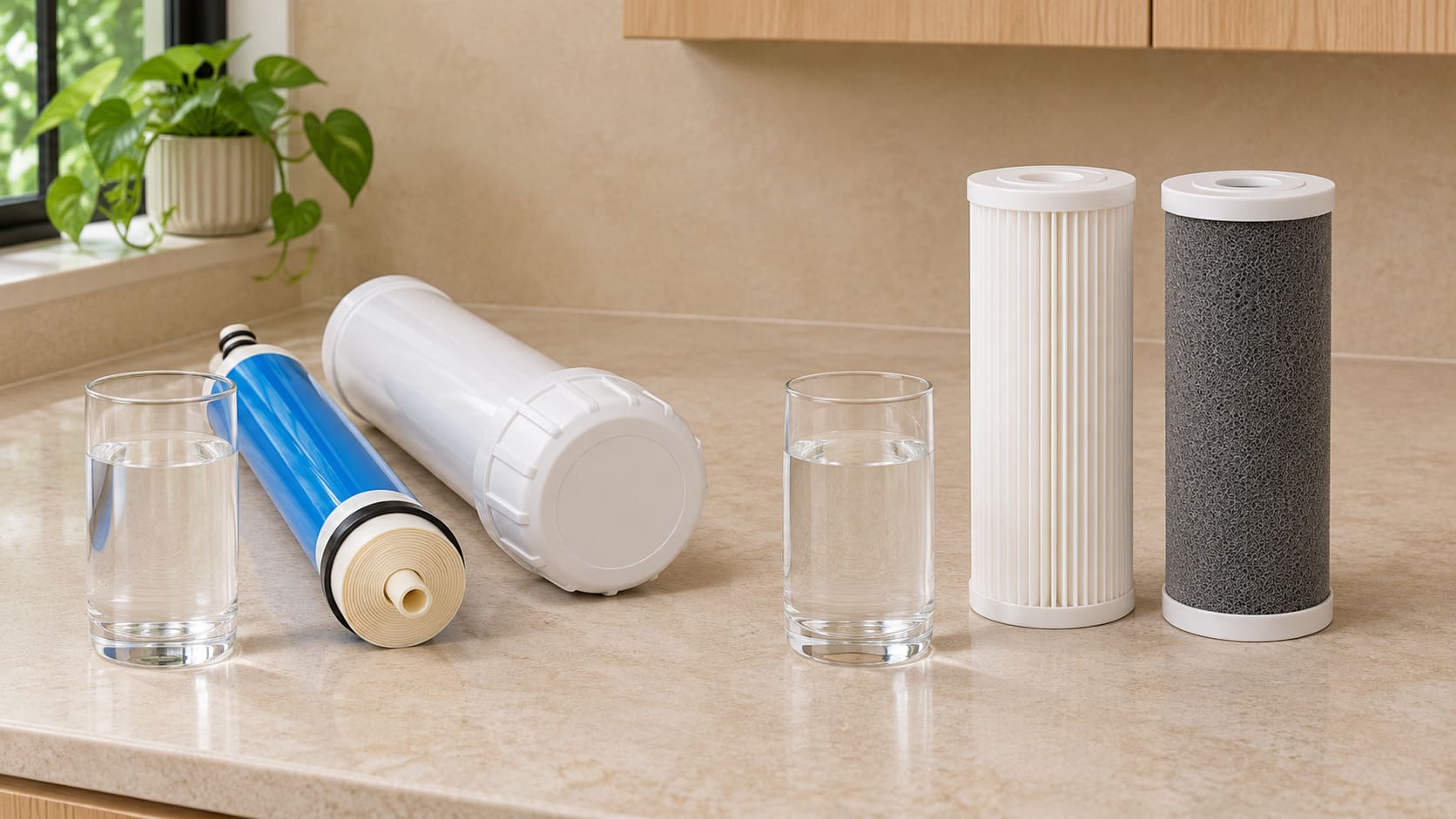
What the terms tell you
Reverse osmosis, or RO, uses a membrane process to separate treated water from a concentrate stream. A point-of-use RO system treats water at a particular outlet. Its actual performance depends on the complete system, operating conditions and maintenance.
“Non-RO” is a broad description, not a single filtration method. It can cover systems using different filter media and processes. Two non-RO products may have different capabilities, so the label alone is not enough to compare them.
Questions that make a fair comparison
| Check | What to ask |
|---|---|
| Treatment purpose | Which specific substances or characteristics is the model designed to reduce? |
| Evidence | Is there a performance report or certification covering the exact model and claim? |
| Supply conditions | What inlet pressure and water conditions does the system require? |
| Water use | Does it produce a reject stream, and what efficiency information is available? |
| Upkeep | Which cartridges or membranes need attention, and at what intervals? |
Avoid judging by taste or a single meter reading
Taste can influence personal preference, but pleasant-tasting water alone does not establish that every contaminant is absent. Likewise, a single dissolved-solids reading is not a complete water-quality assessment. Ask what a measurement actually tests and what it leaves out.
If there is a specific concern about your supply, obtain appropriate information from your water provider or a suitable testing service before choosing treatment. During a supply advisory, follow the relevant authority’s instructions rather than assuming a domestic filter resolves it.
Keep technology separate from convenience features
Hot water, cold water, child locks, tank size and countertop dimensions describe how you use the appliance. They do not establish its contaminant-reduction performance. Make two shortlists: one for treatment requirements and one for everyday functions.
A household may prefer a particular control layout or temperature selection after the treatment requirements have been checked. For tank layout and repeated dispensing, read the existing tankless-versus-tank guide rather than treating those designs as synonyms for RO or non-RO.
What to request with a quotation
- The exact model and filtration-stage description.
- Evidence supporting the particular reduction claim you care about.
- Installation requirements, including any drain connection.
- Replacement consumables, service scope and related charges.
- A written explanation of the recommended system for your supply and routine.
Use the water-purifier collection to review available models, then confirm their individual technology. Do not assume every product under one brand uses the same filtration process.